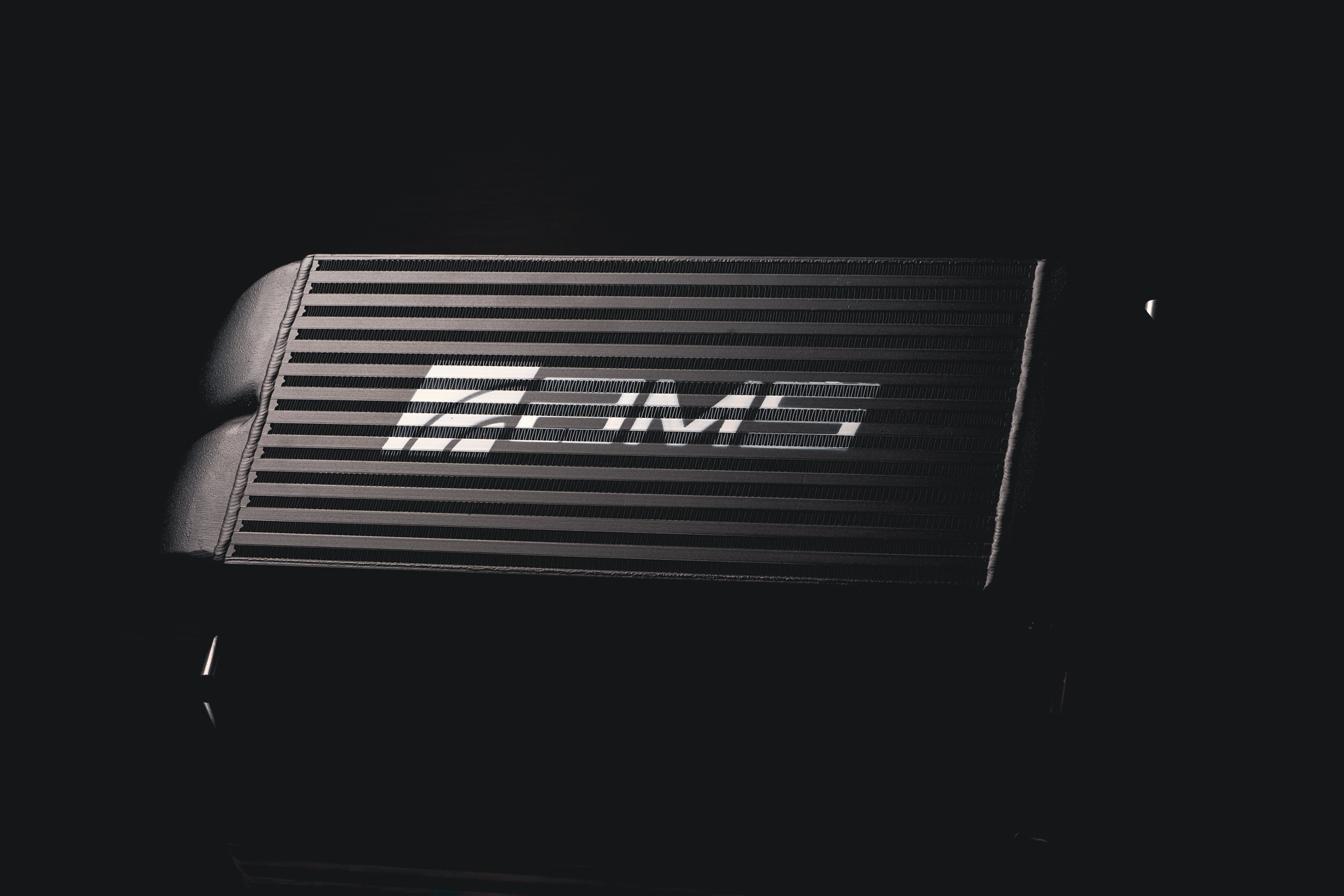
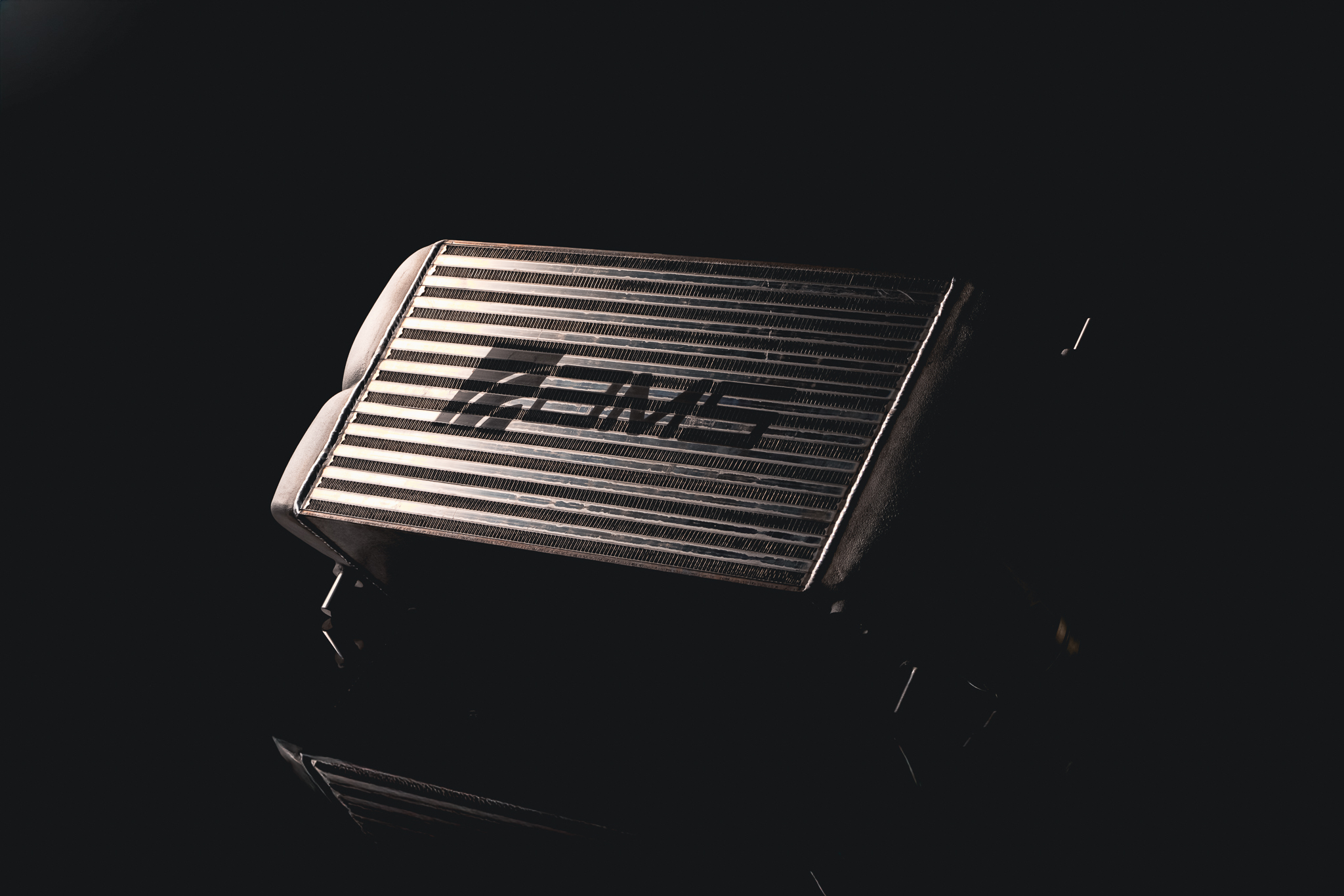
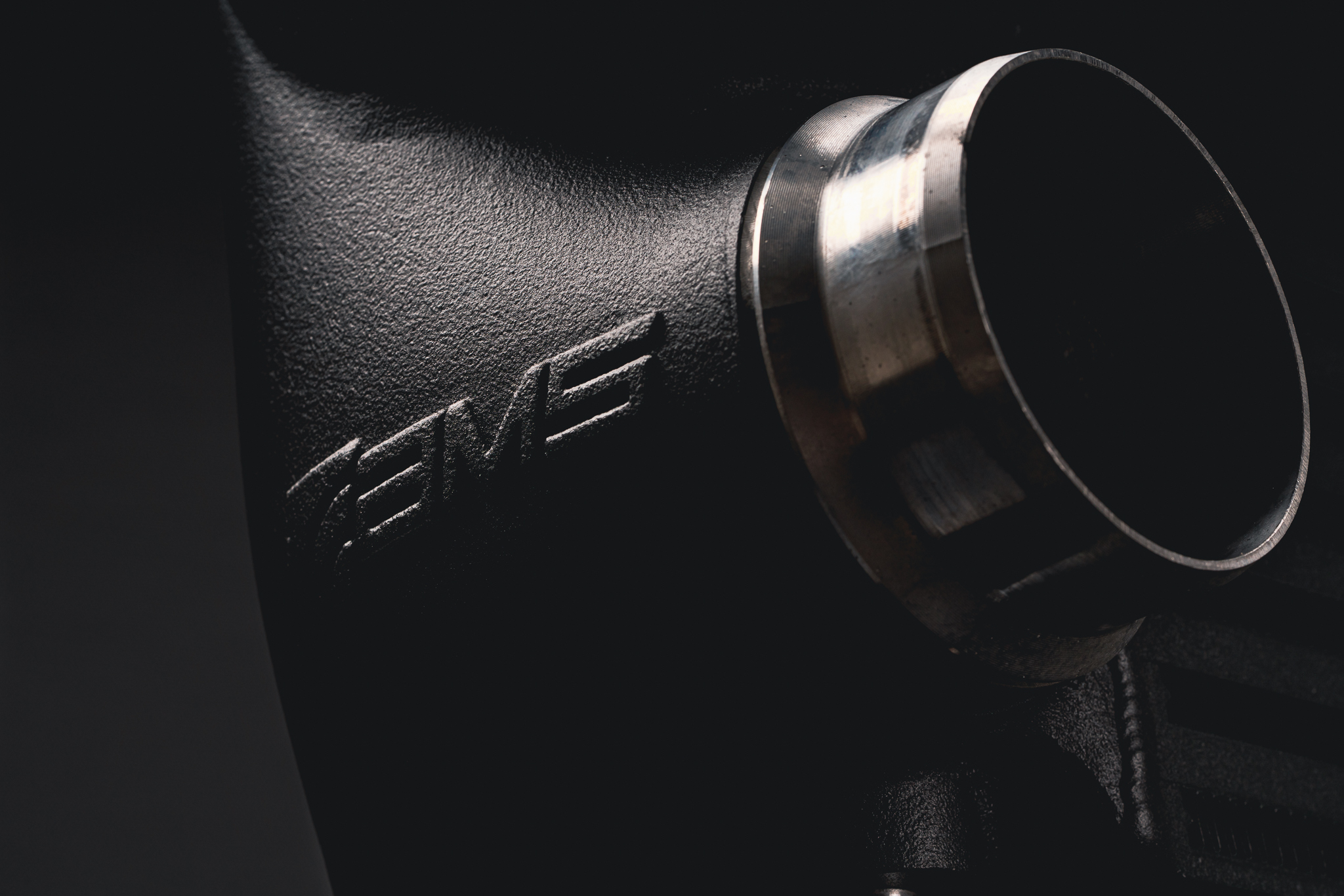
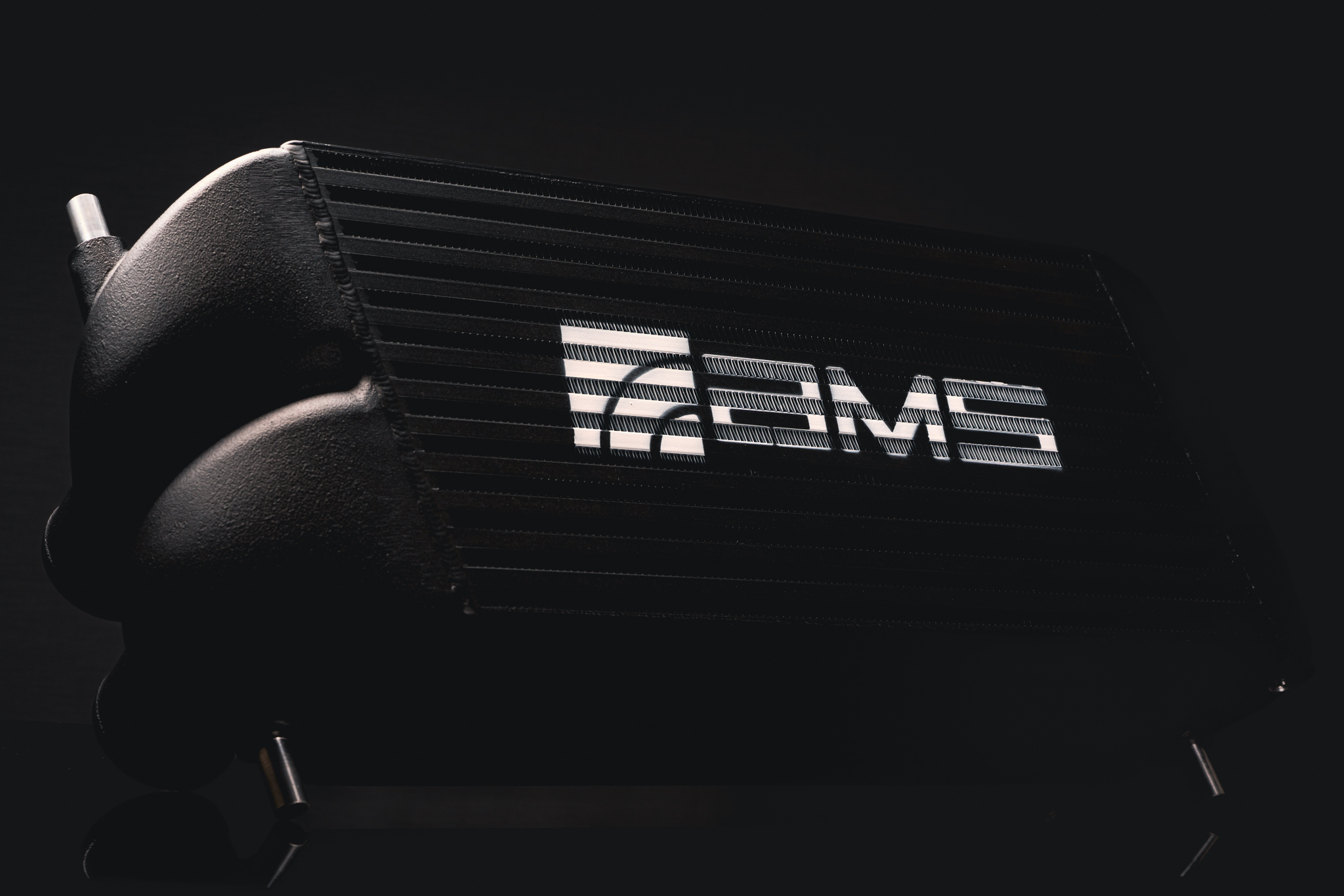
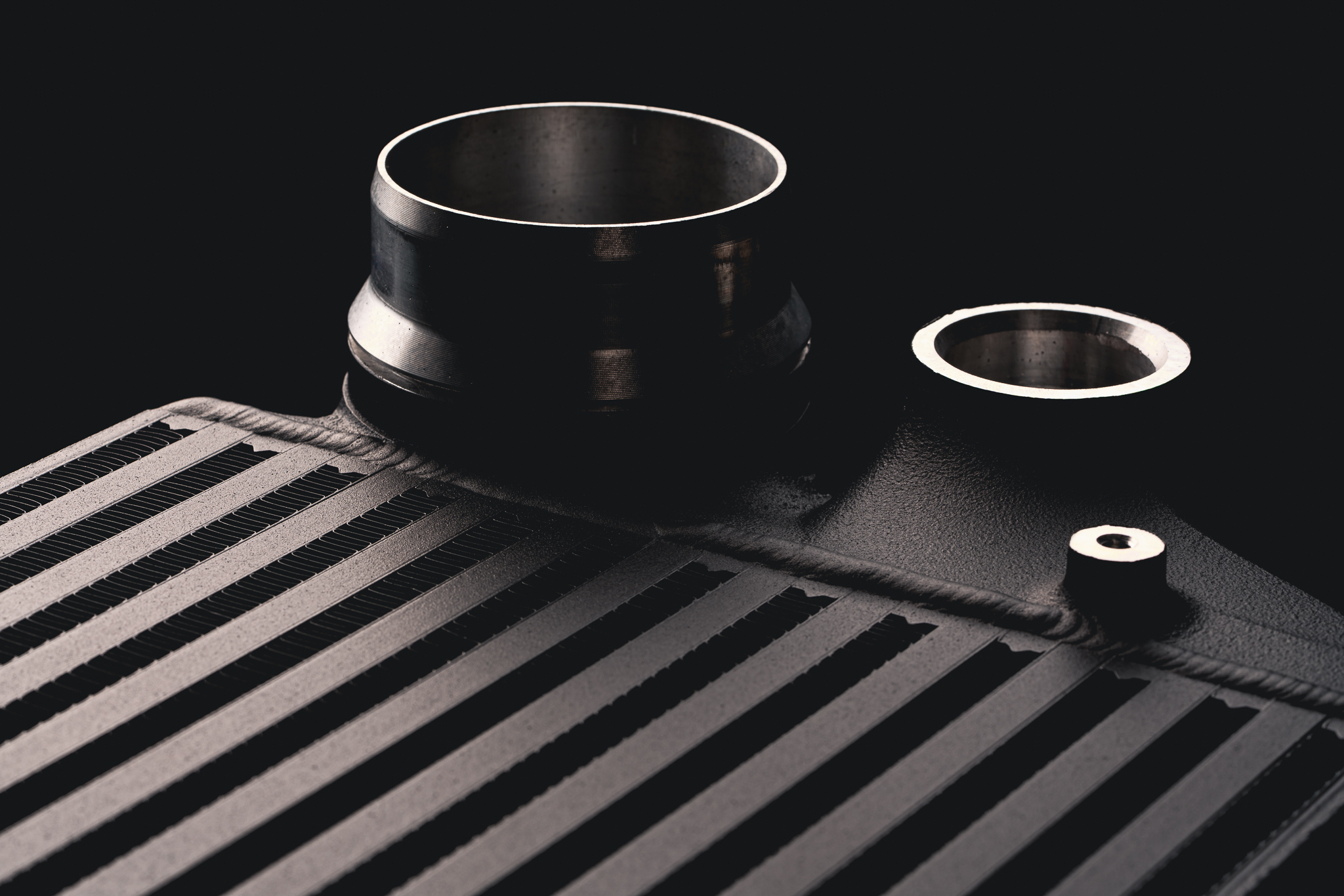
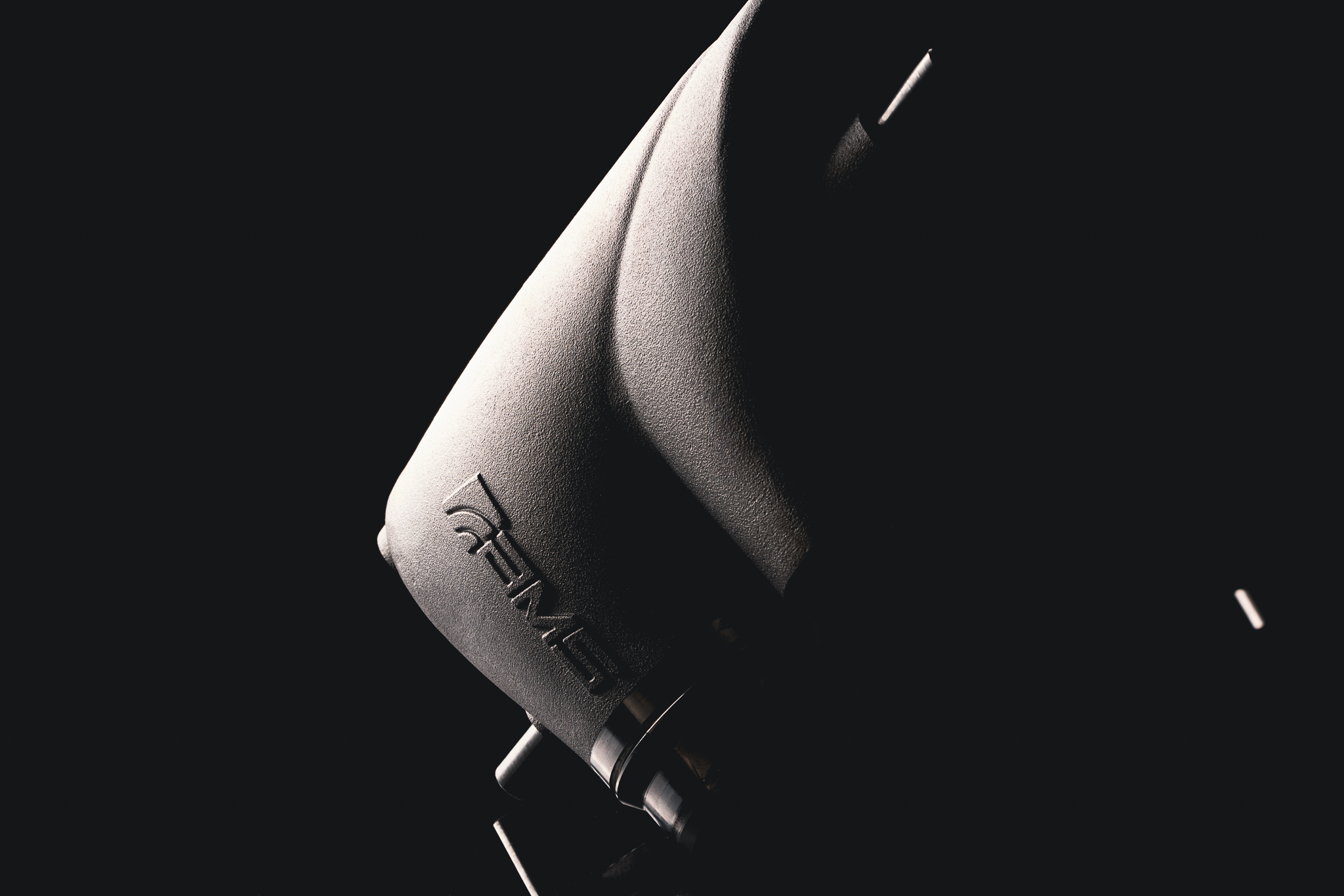
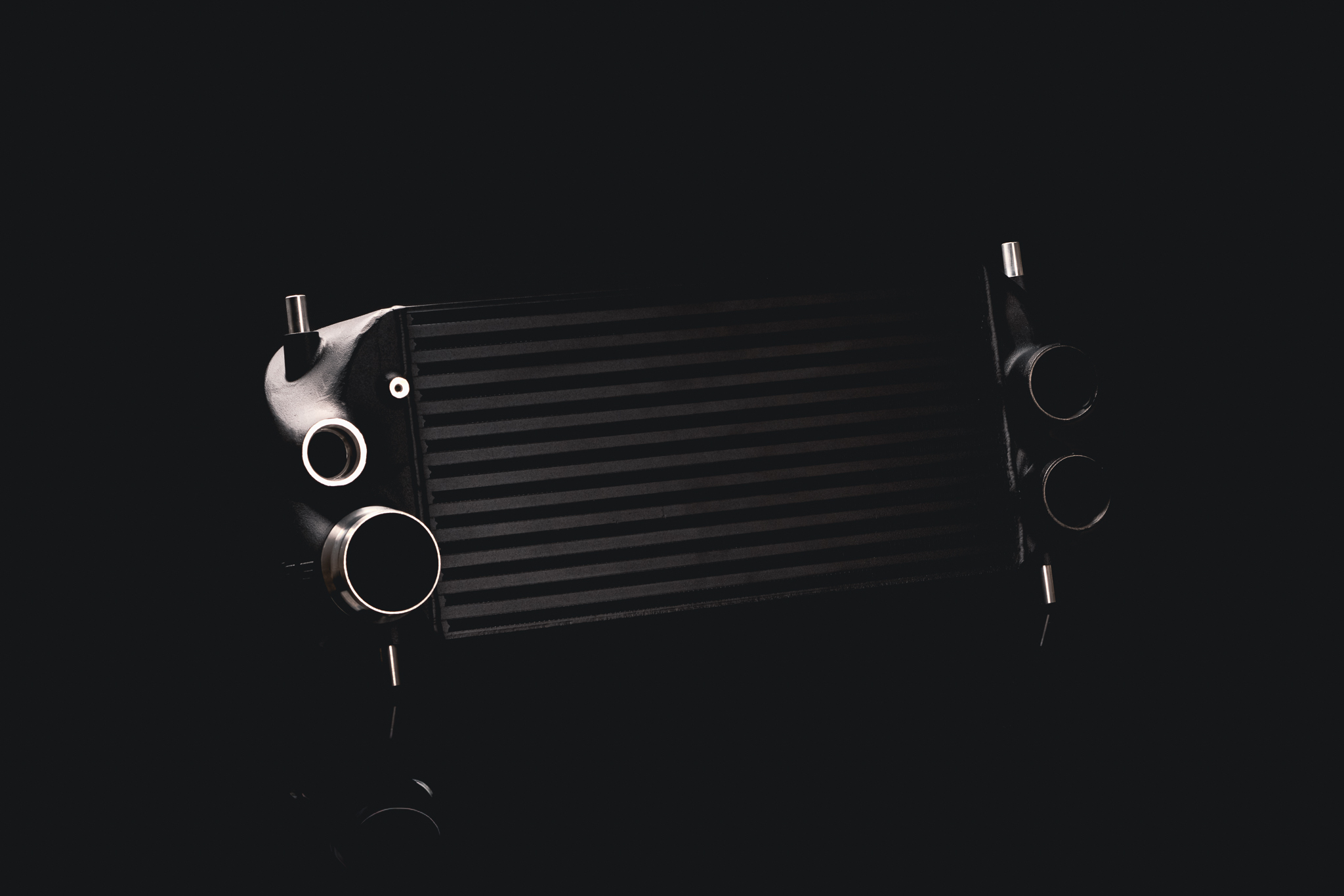
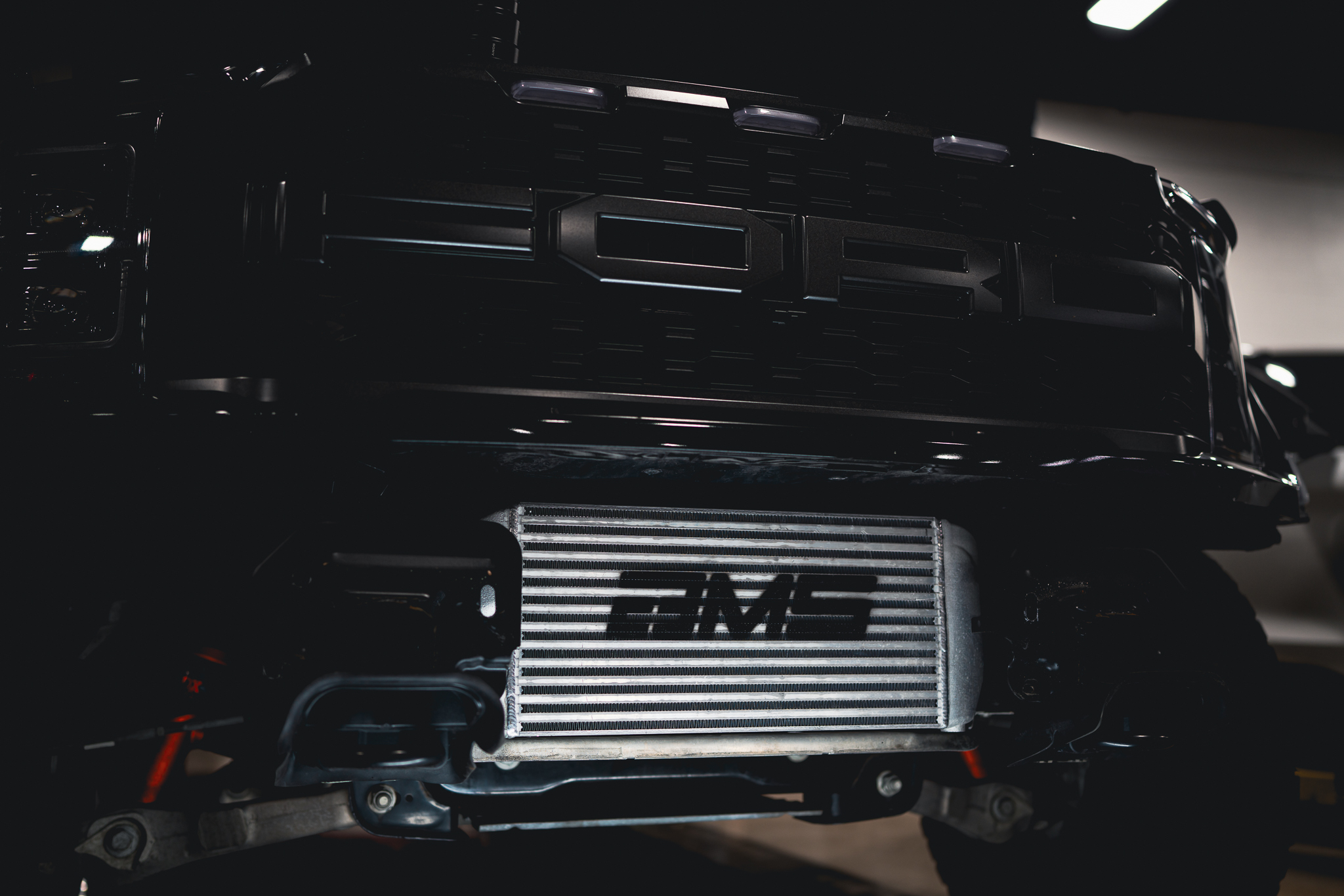
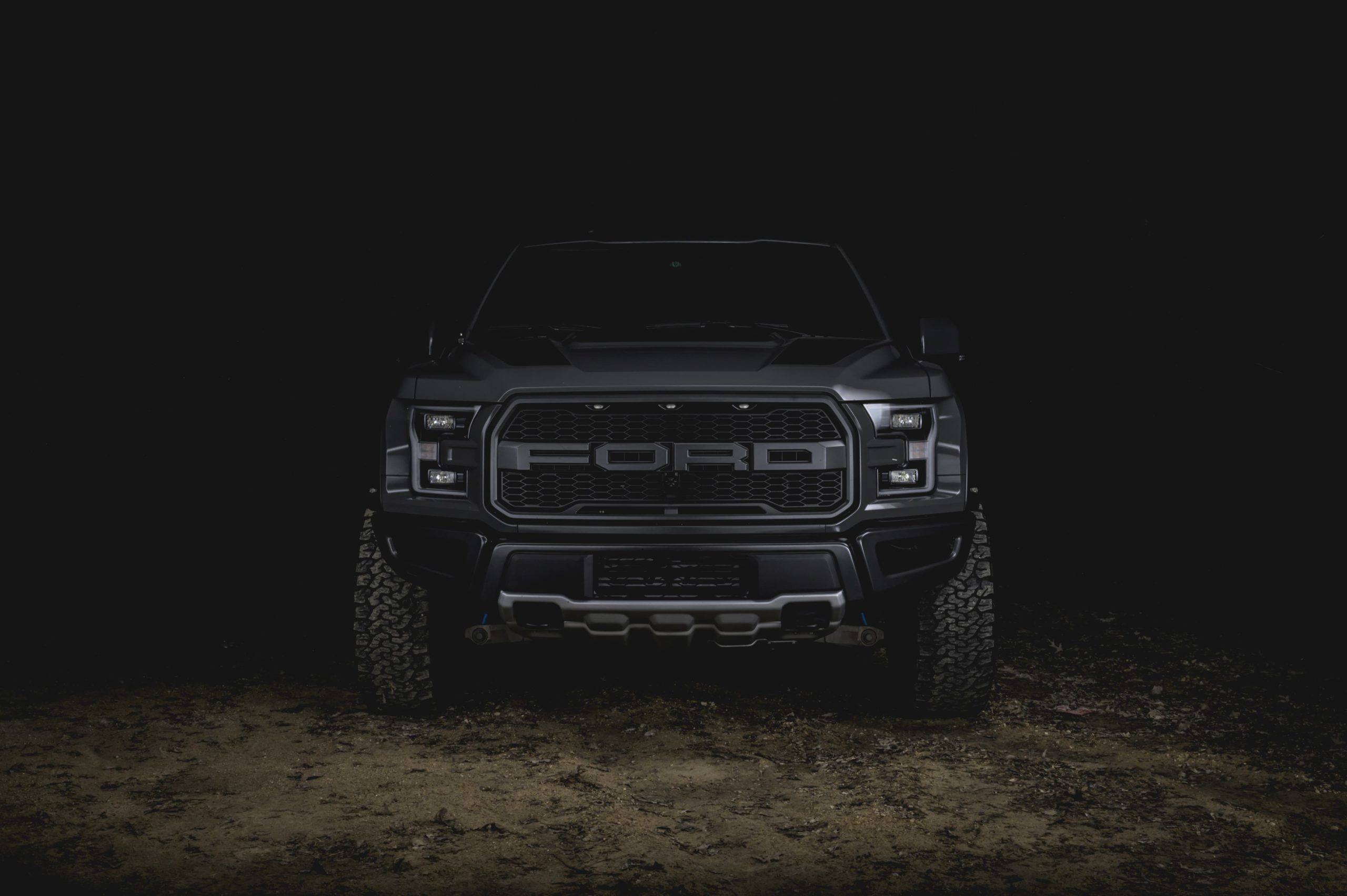
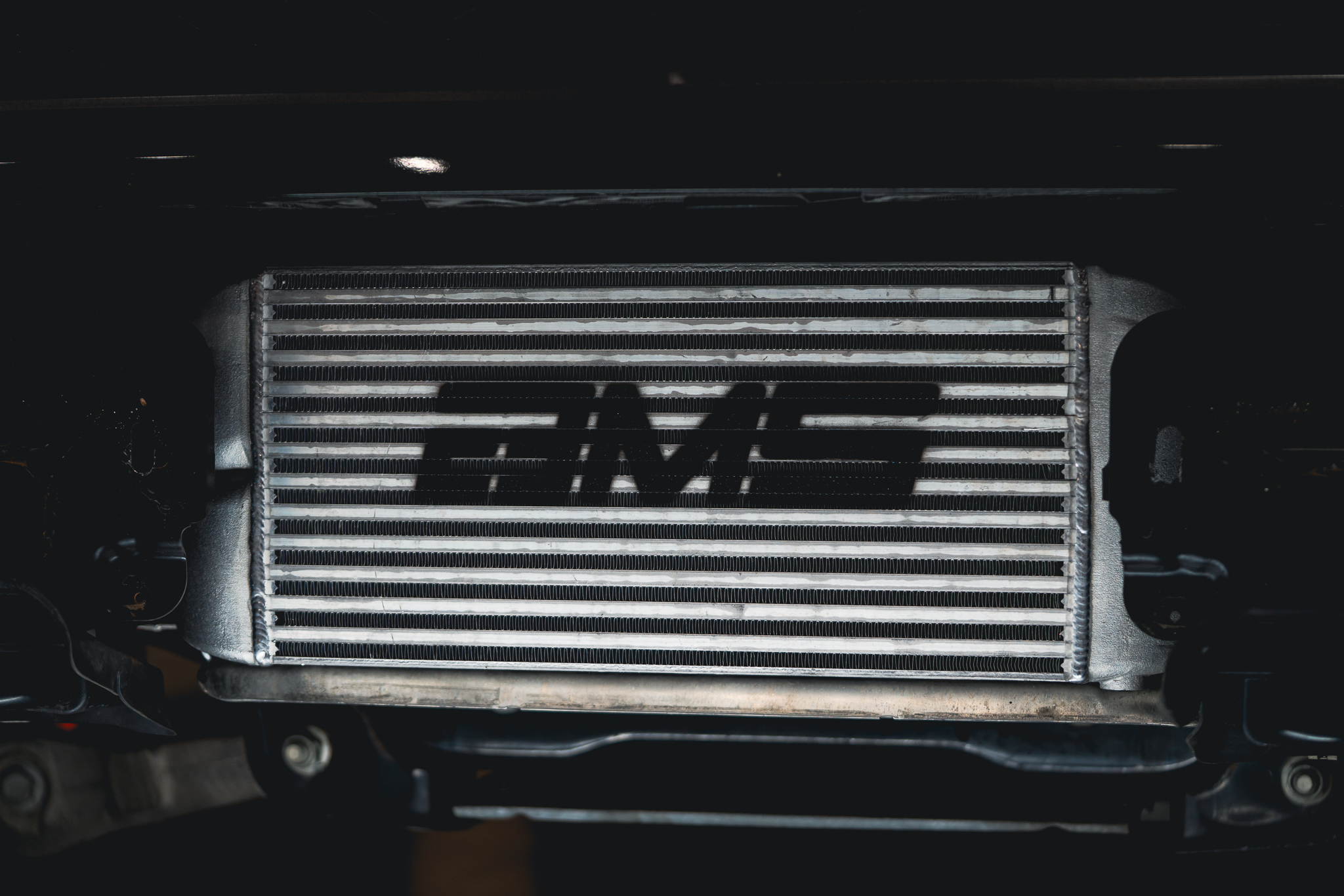

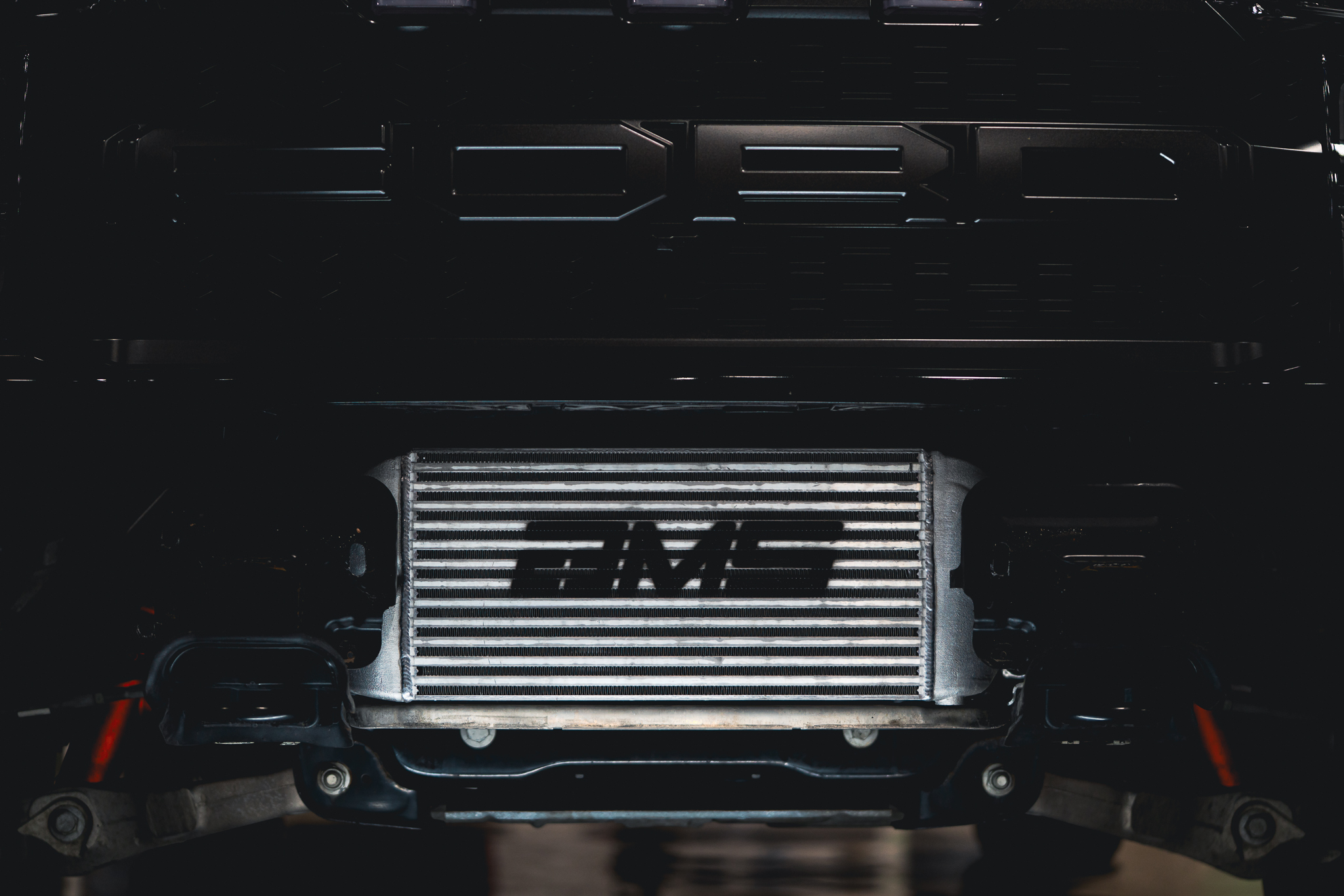
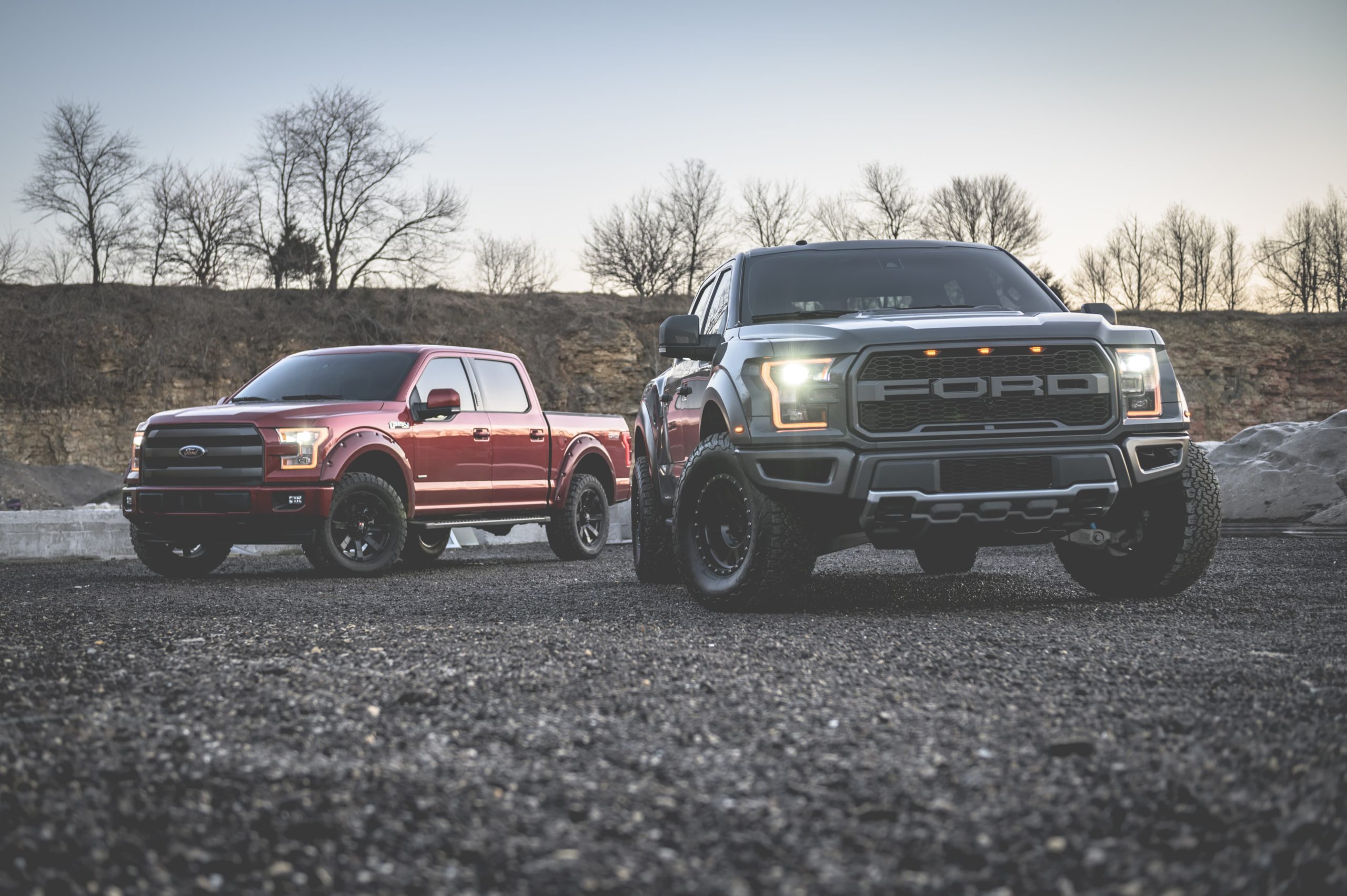
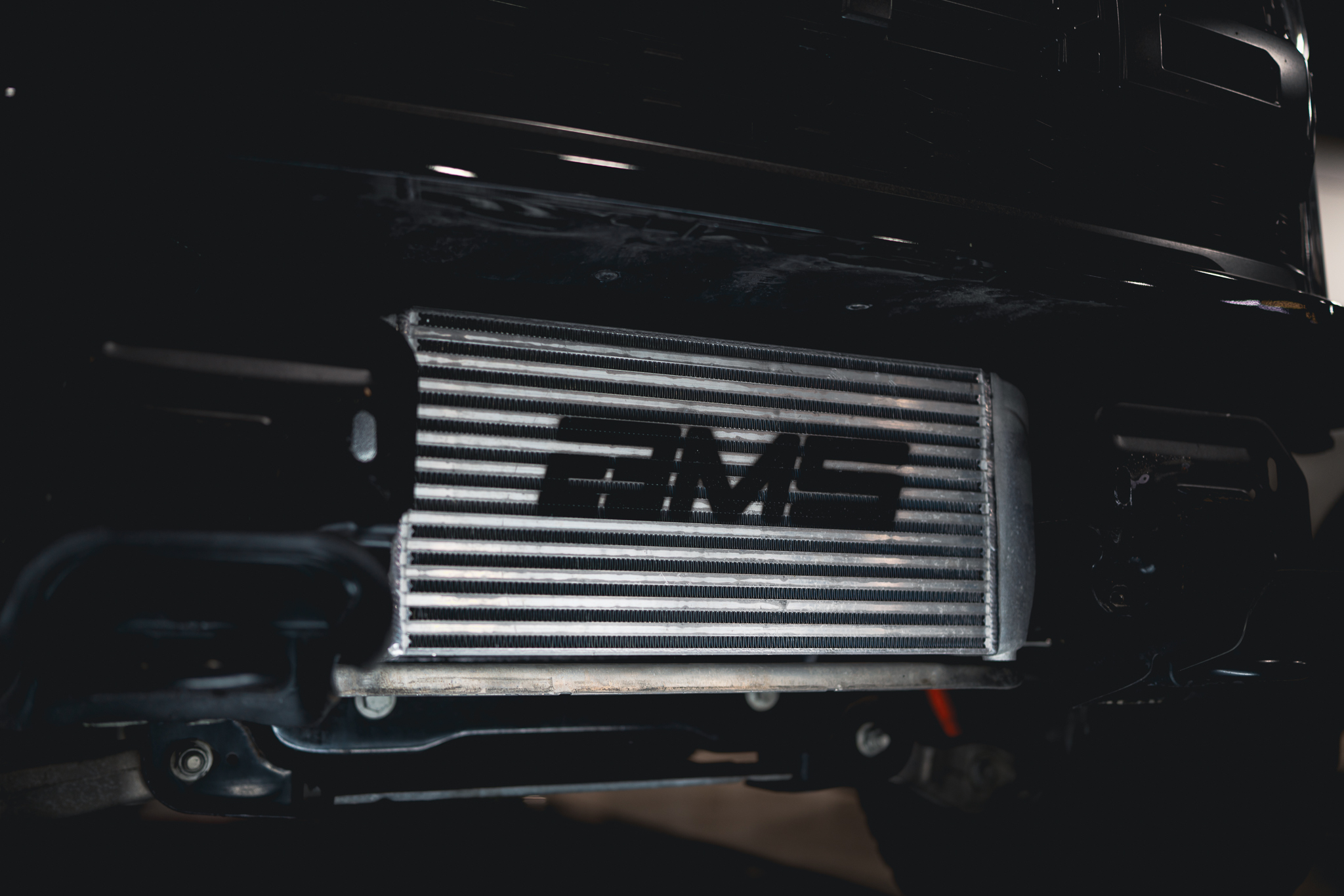
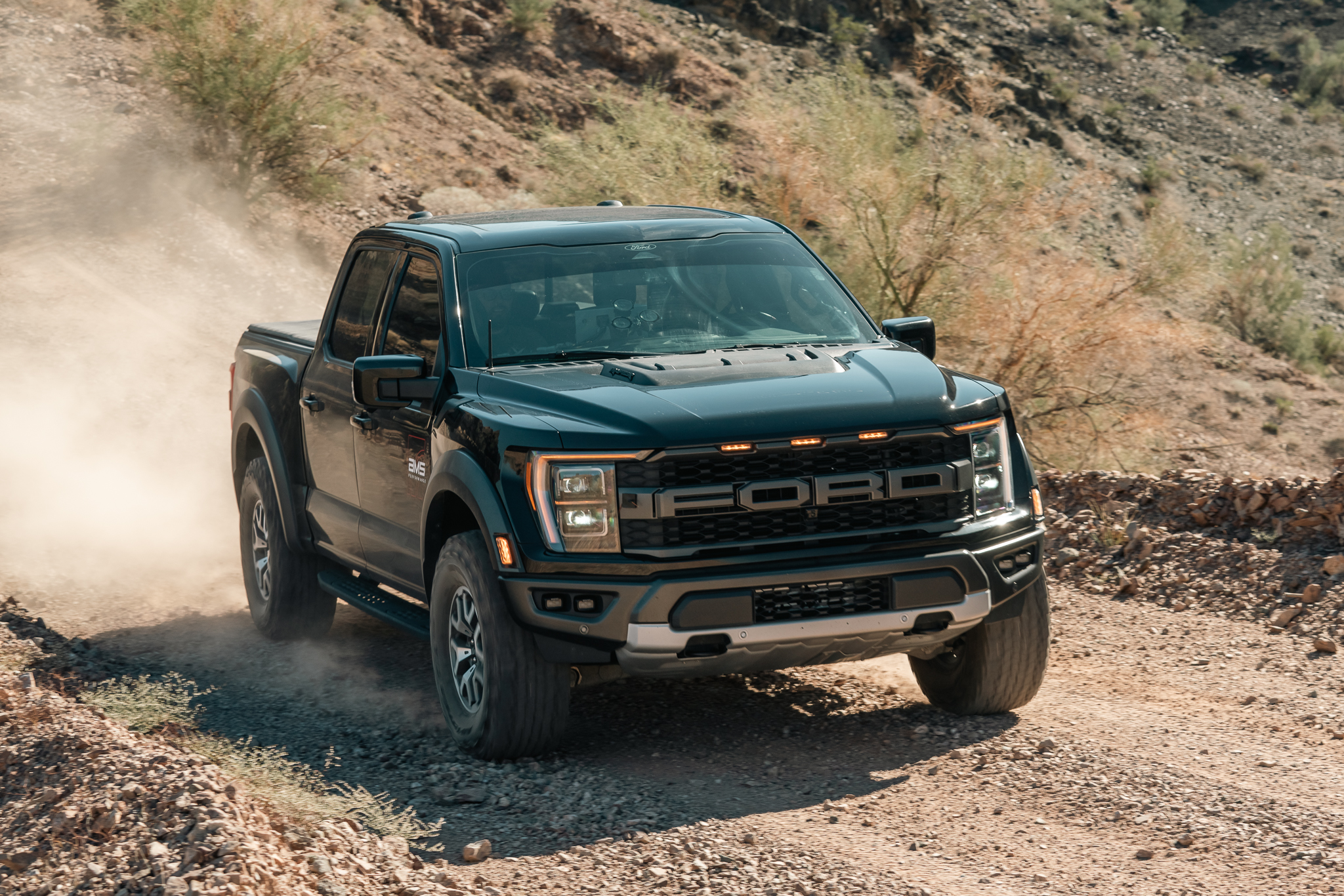
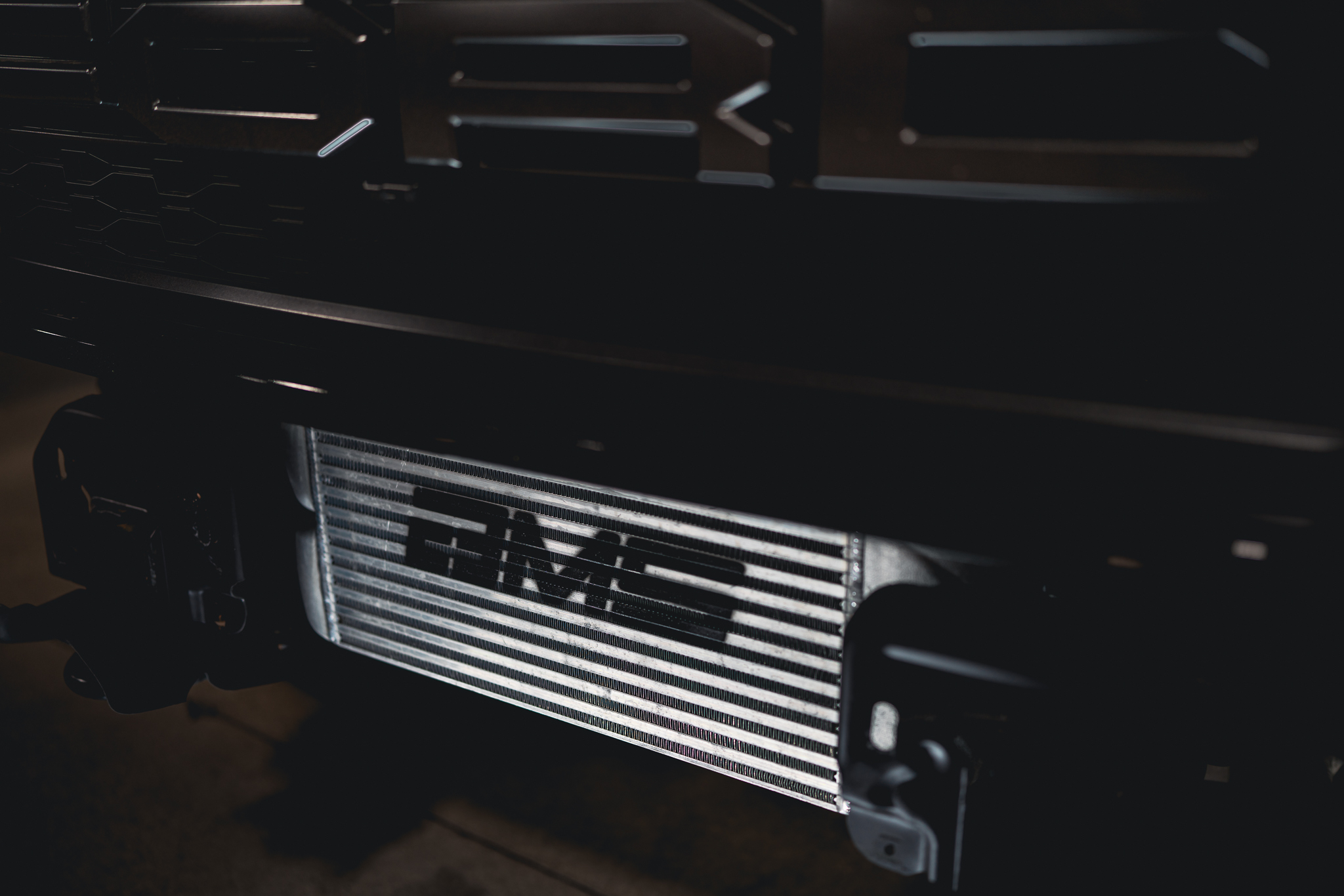
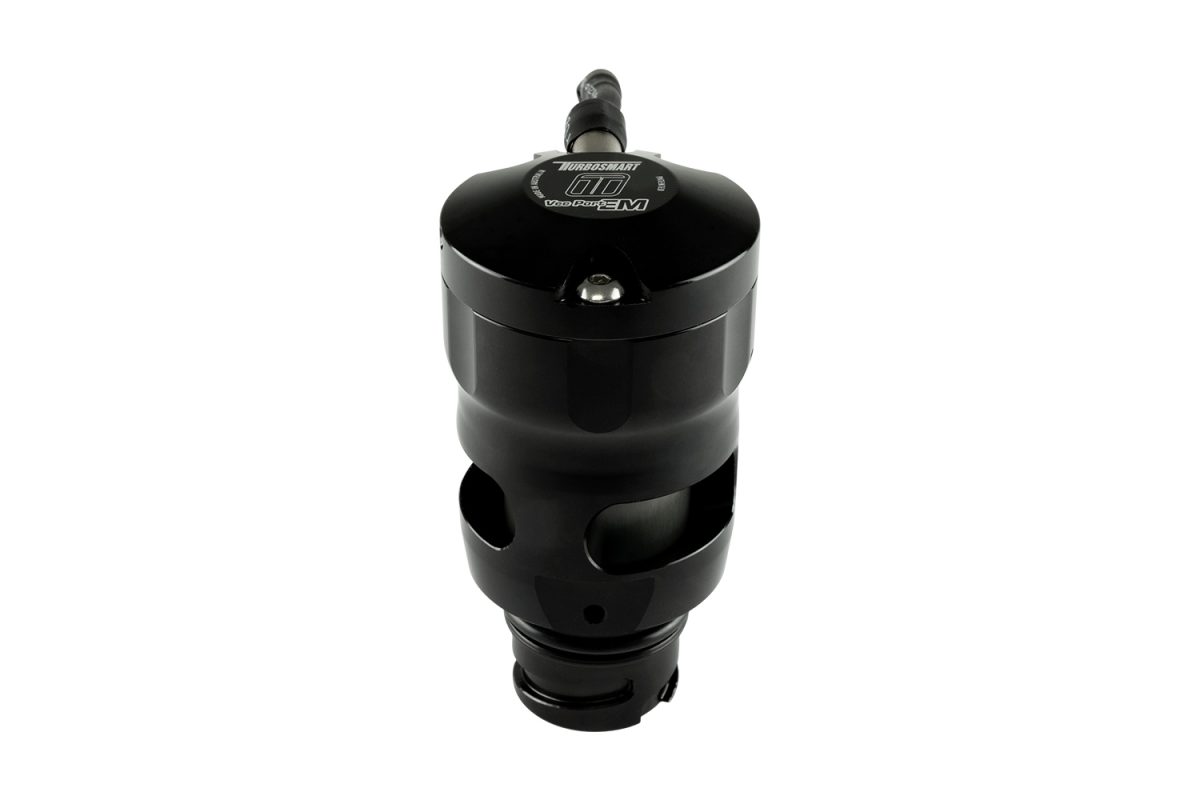

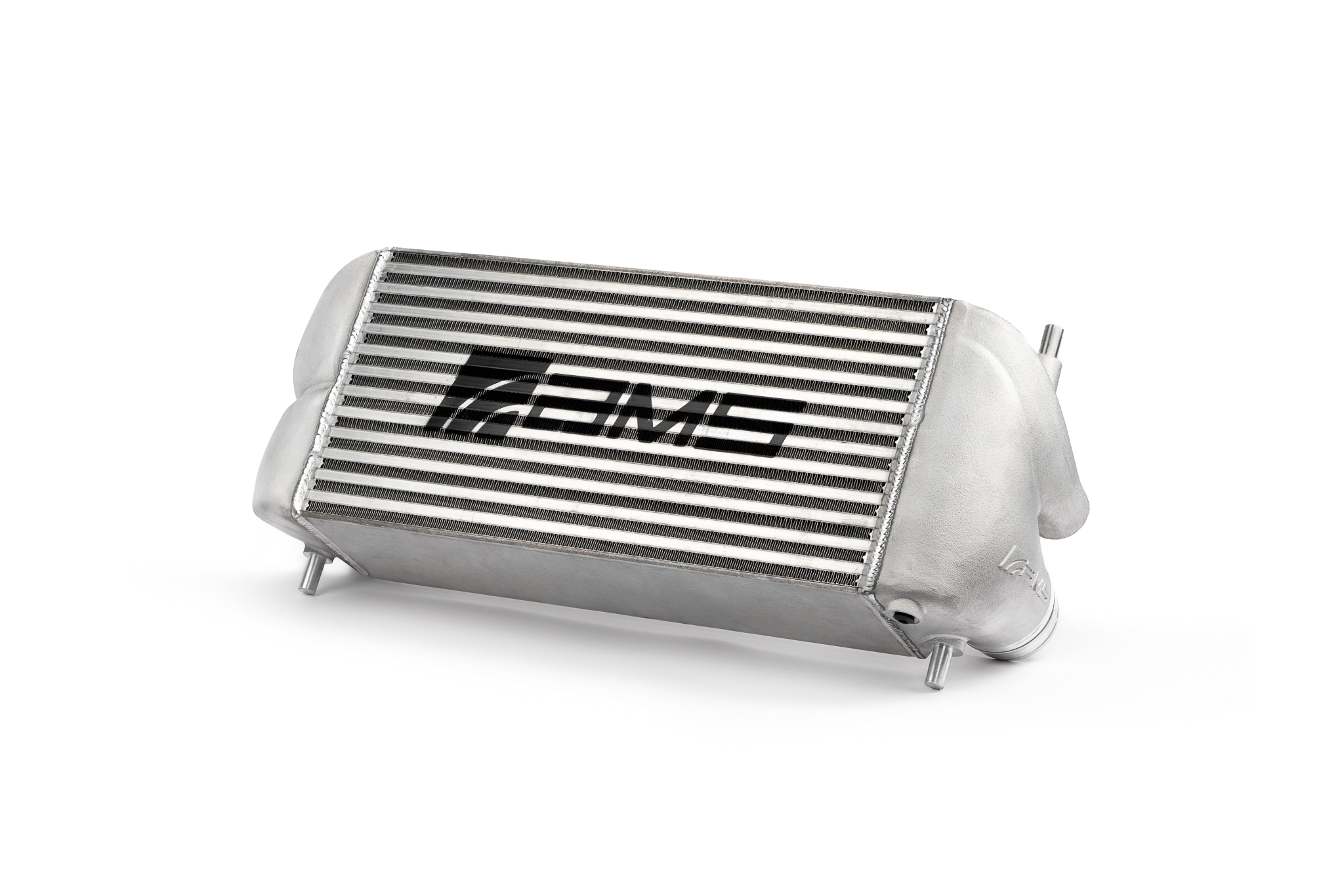
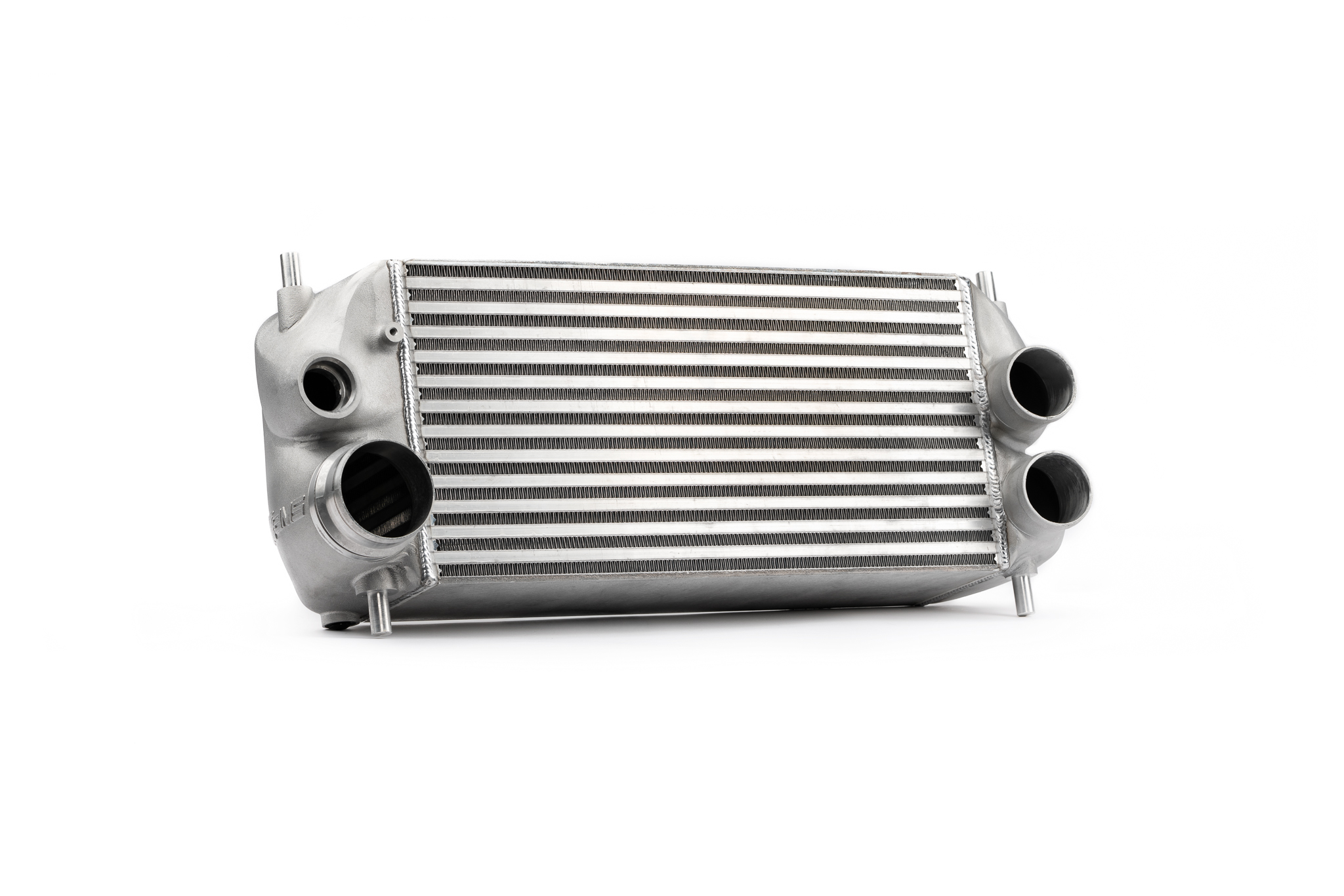
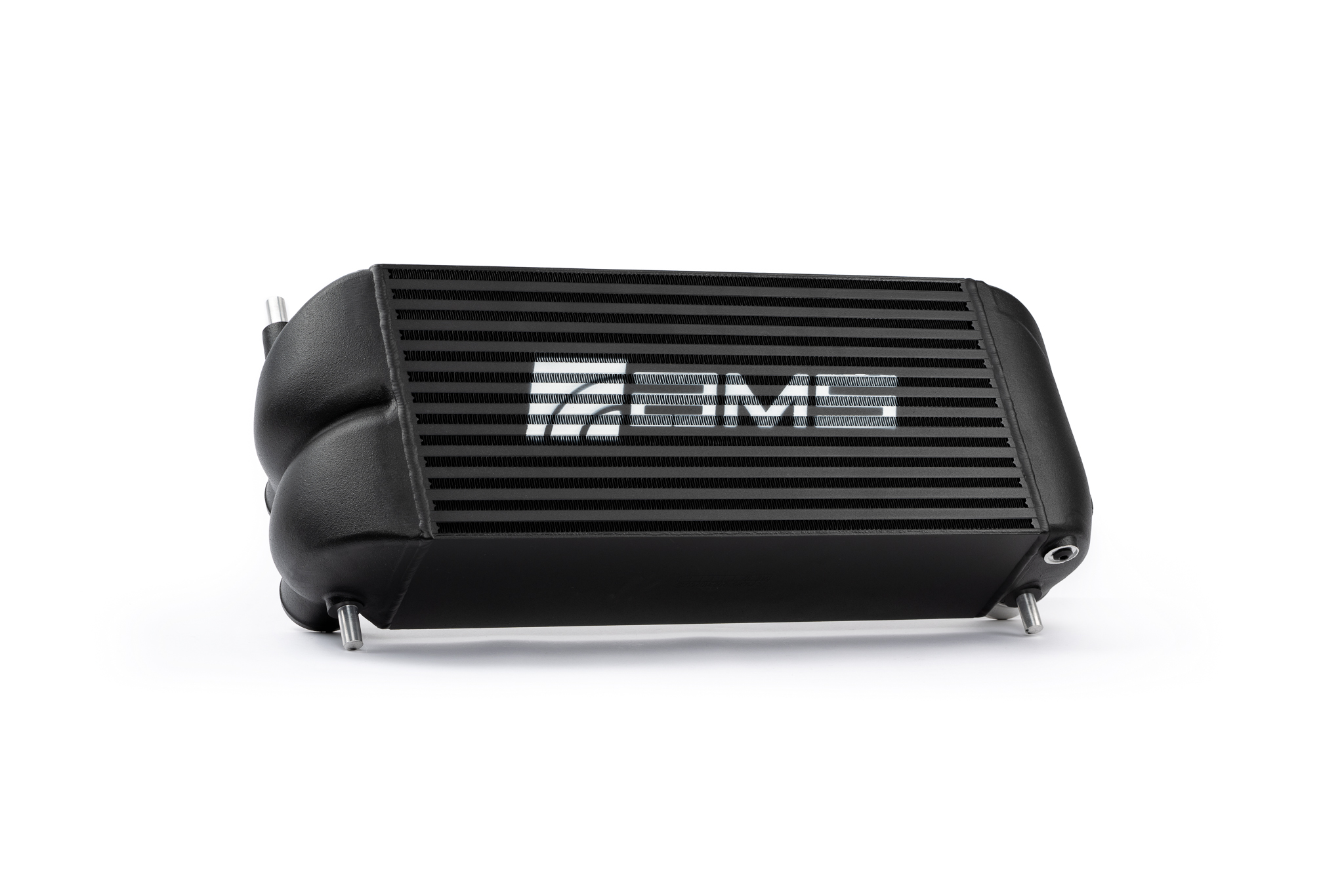
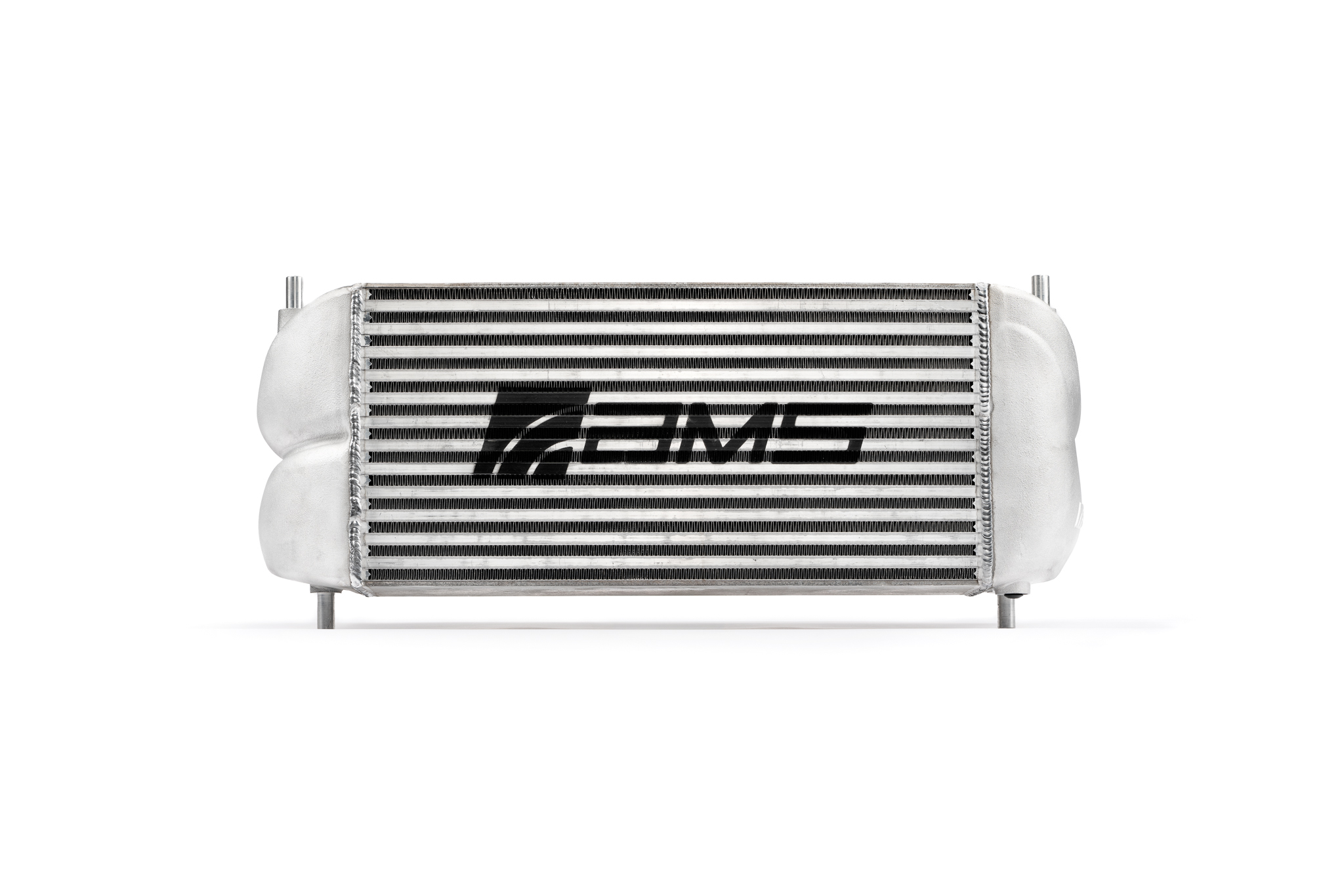
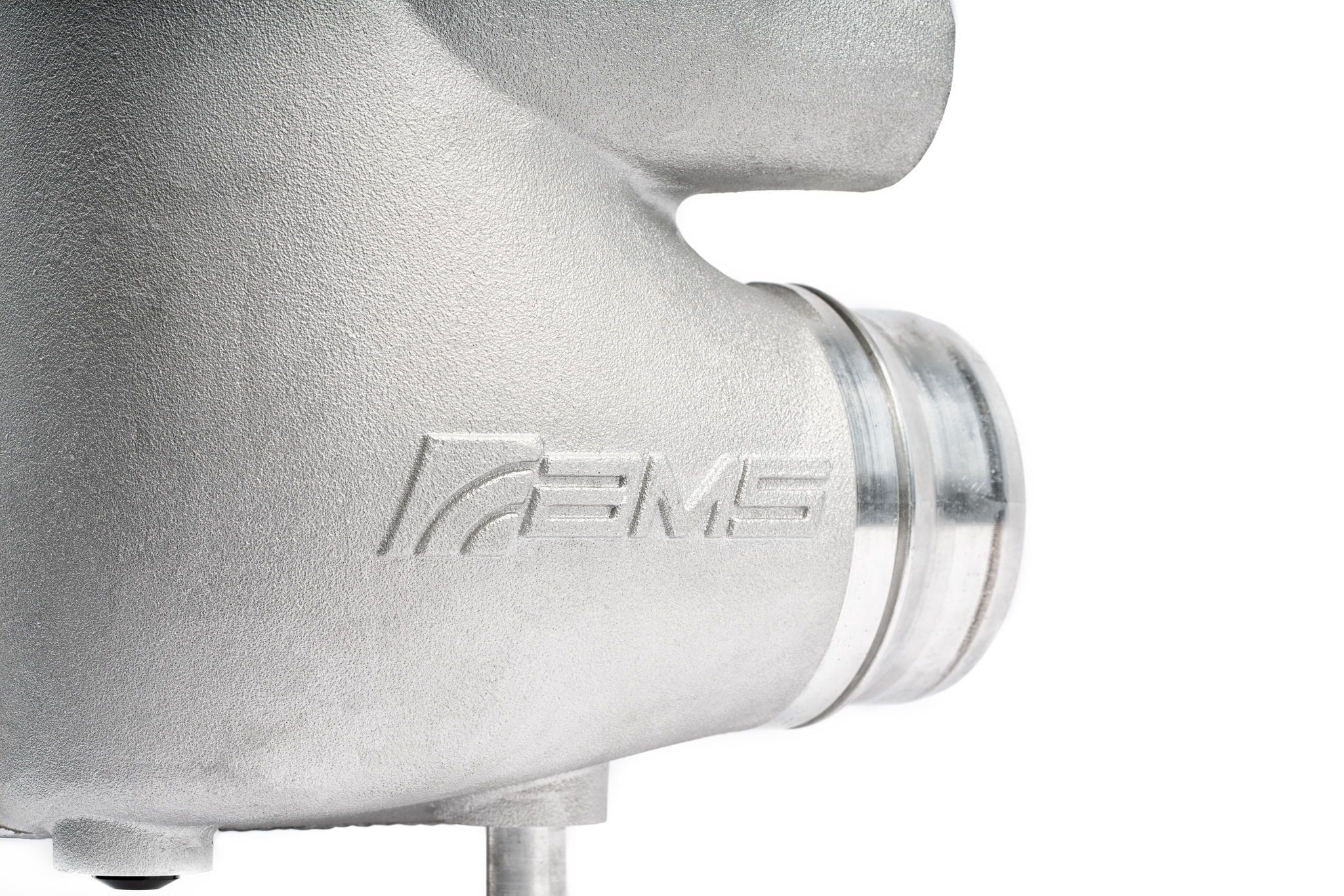
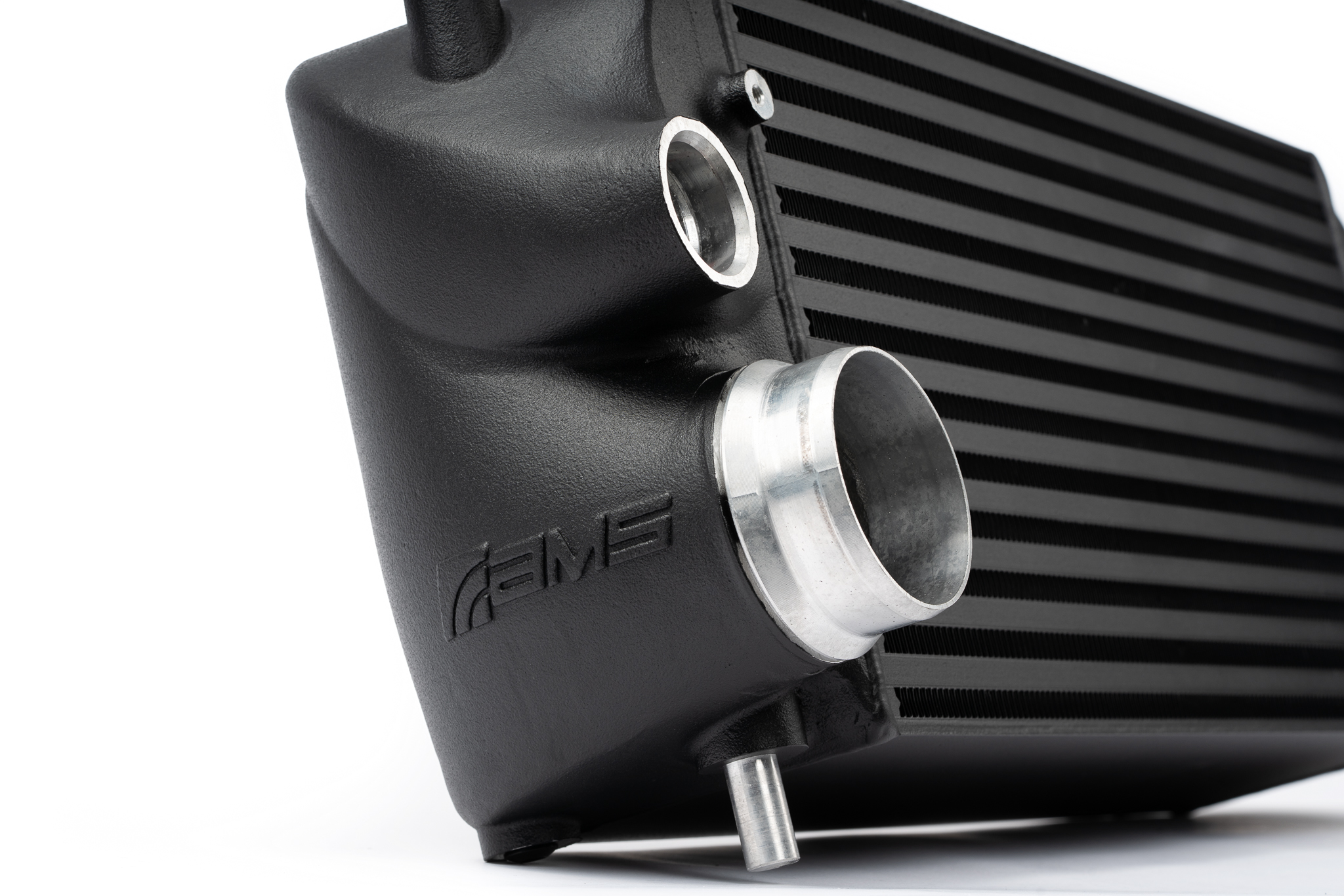
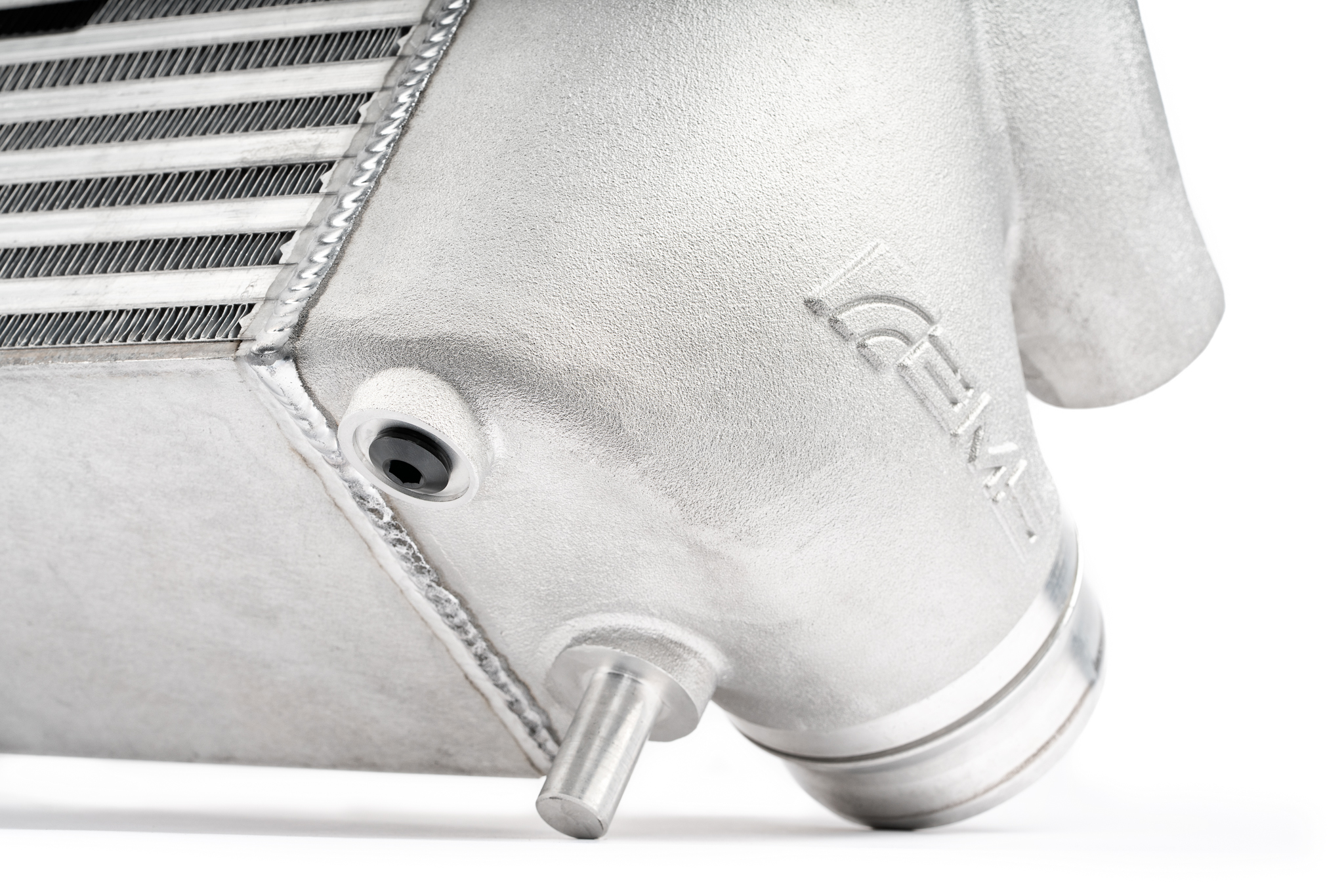
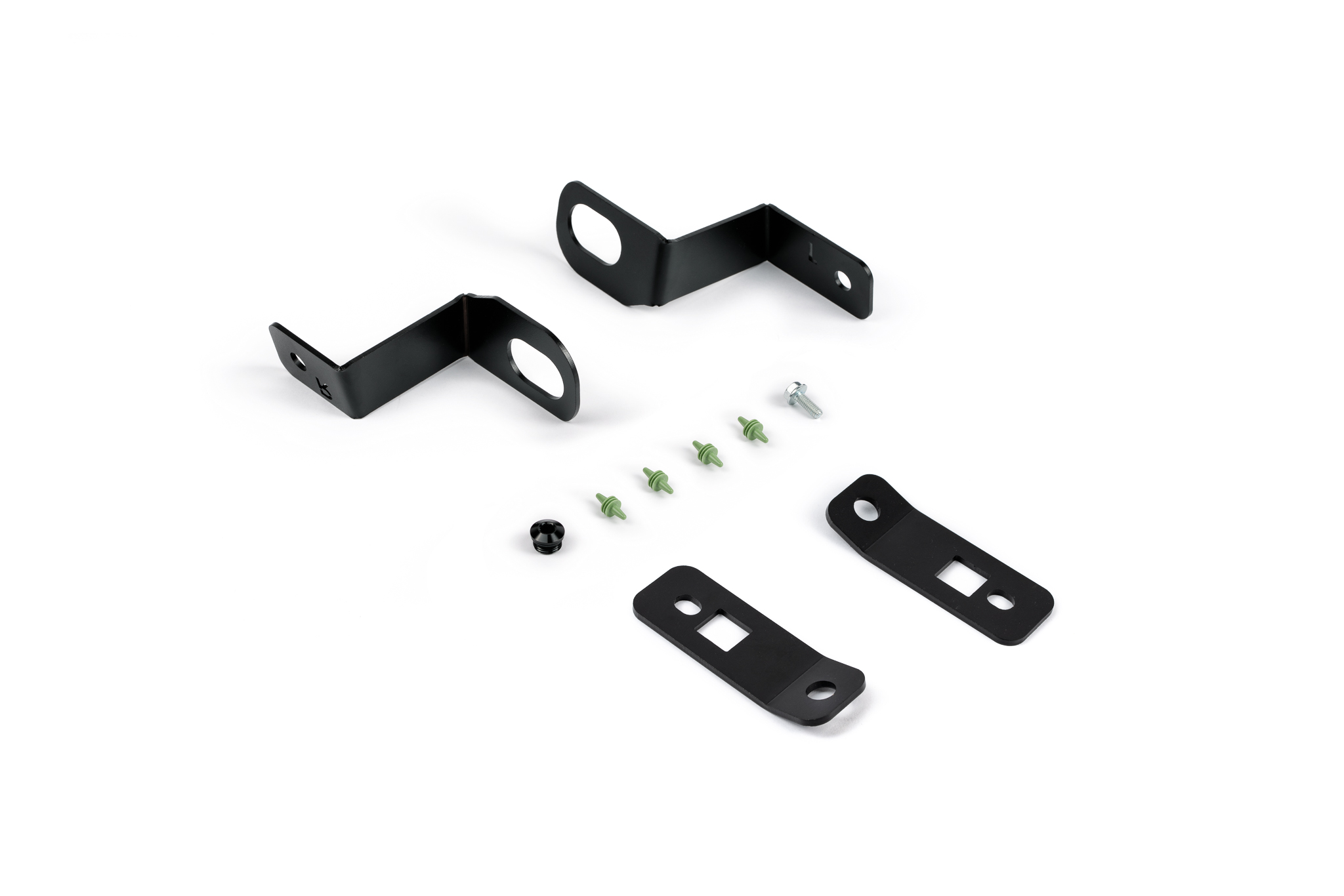
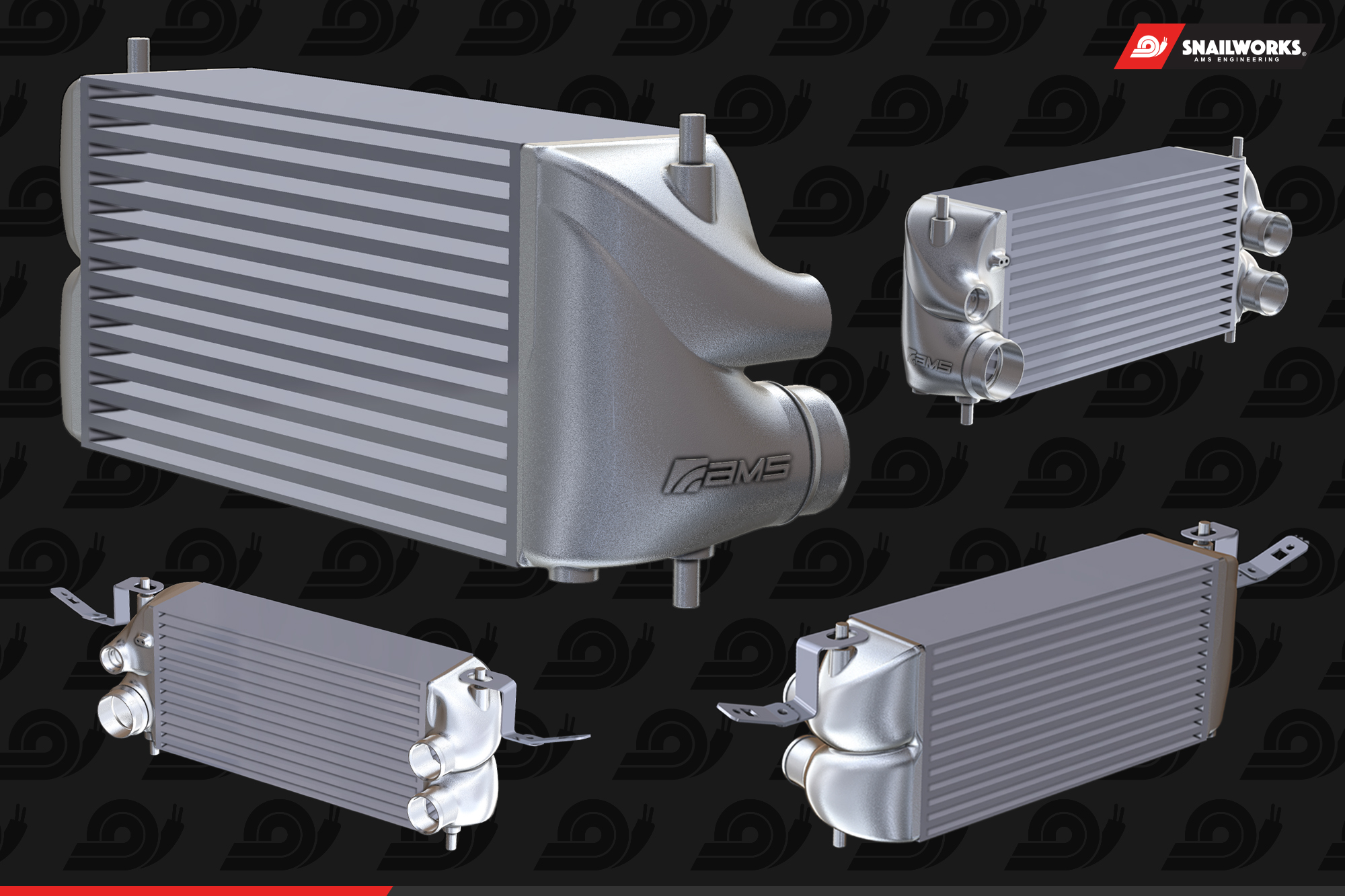
The AMS Performance 2015+ Ford F-150 and Raptor 2.7L and 3.5L EcoBoost Stock Location Intercooler is the largest OEM-location intercooler core on the market for this platform, measuring 21 x 10.25 x 5.5 inches of dense bar and plate construction at 115 percent larger than stock. That size advantage translates directly into performance, delivering up to 80 degrees cooler charge air temperatures and up to 93 percent intercooler efficiency versus as low as 59 percent for the OEM unit. On the same calibration with no tuning changes, our test Raptor picked up 12.3 wheel horsepower while running nearly 2 PSI less boost, and that is before a recalibration optimized for the AMS intercooler unlocks what the cooler charge temps and reduced pressure drop are truly capable of. Engineered with flow-optimized cast end tanks, chamfered inlets, a sharp-edge-free airflow path, and an integrated drain port, this intercooler is built to the standard most competitors in this space never reach. It is compatible with popular aftermarket BOV offerings including the Turbosmart VeePort, fits 2015 through current 2.7L and 3.5L EcoBoost F-150 and Raptor trucks, and retains all factory mounting locations and piping fitment for a clean, bolt-in installation. Available in raw aluminum or black powder coat with or without the AMS logo. Cooler charge air is denser air, and denser air makes power.
Most companies in this space start with a tape measure. They find the largest core that fits the opening, weld on end tanks, and call it an upgrade. At AMS, the process starts somewhere different. It starts with understanding exactly why the factory part falls short, how quickly it gets left behind, and under what conditions the performance gap widens most. The factory intercooler on the 2.7L and 3.5L EcoBoost F-150 and Raptor was designed around OEM packaging and cost constraints, not performance. Our SnailWorks Engineering Team used that as the baseline and asked a different question: what would this intercooler look like if the only constraint was building the best possible part?
That question drove the original AMS F-150 intercooler, and it drove the development of this one even more. This is a ground-up redesign of our previous offering, incorporating everything we learned from years of real-world use into a second-generation unit that raises the bar across the board. Cast end tanks replace the fabricated design of the original, providing consistent charge air distribution across the full core width. An integrated drain port allows accumulated condensation or blow-by to be cleared without pulling the intercooler from the truck. And for tuners who want more than the factory blow off valve, the updated design retains the OEM BOV location while adding full compatibility with popular aftermarket offerings including the Turbosmart VeePort. The core itself remains the same proven 21 x 10.25 x 5.5 inch bar and plate construction, still the largest OEM-location core on the market for this platform at 115 percent larger than stock. The result is an intercooler that fits perfectly, cools at the limits of what the factory location allows, and installs without compromise.
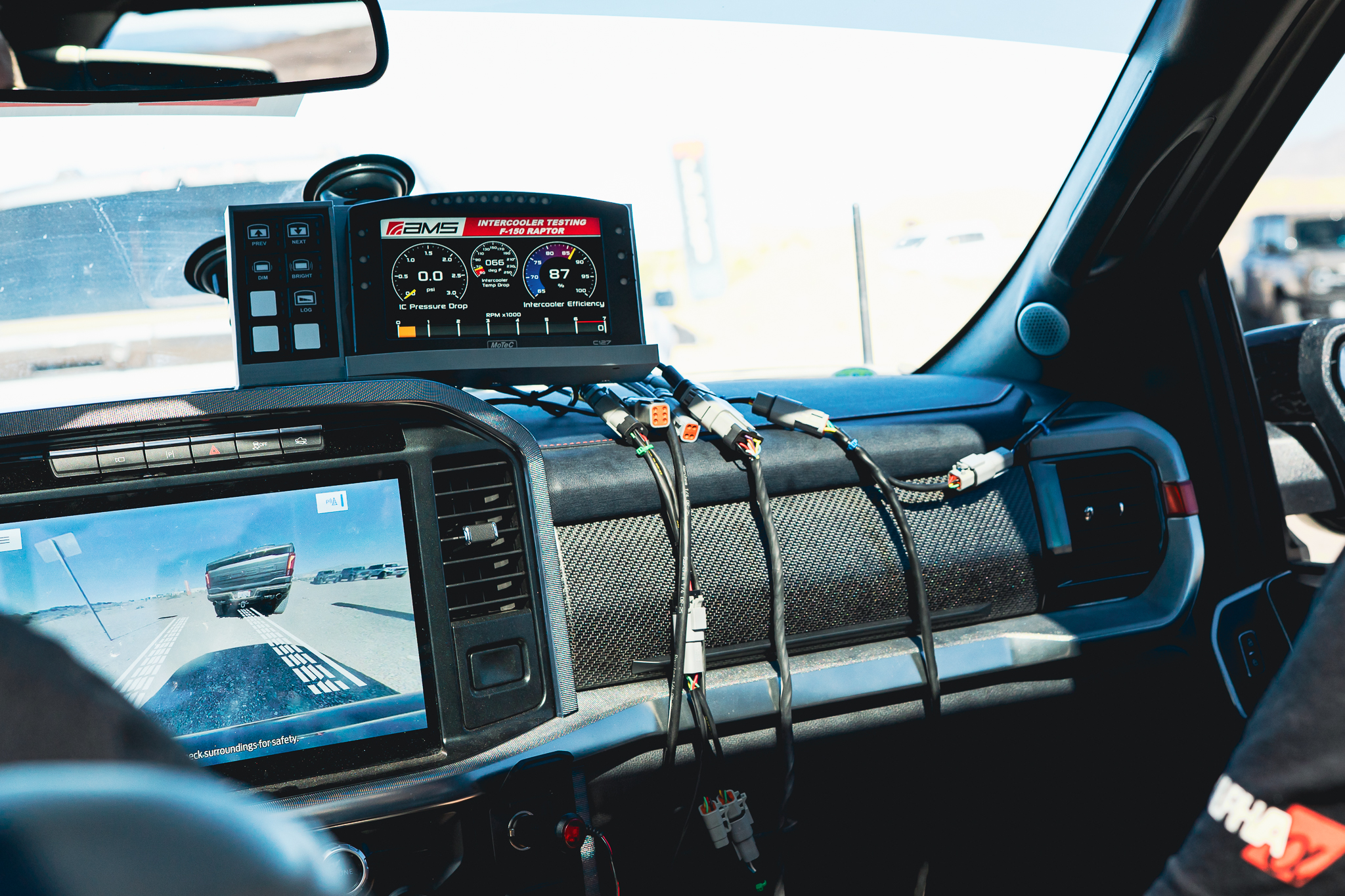
Claims without data are just marketing. Before any product reaches a customer, our SnailWorks Engineering Team puts it through rigorous real-world testing to validate performance against a clear baseline. Our development vehicles are equipped with a MoTeC dash data logger and a 19-sensor array that monitors critical engine and turbocharger parameters in real time, allowing our engineers to capture detailed data during dyno testing and on-road validation. For the AMS F-150 and Raptor Stock Location Intercooler, testing was conducted on a 2022 Ford F-150 Raptor 3.5L EcoBoost via extensive on-road testing and on a Mainline hub dyno using 93 octane fuel and a COBB Accessport Stage 2 off-the-shelf calibration. Every run used the same tune file with the only variable being the OEM intercooler versus the AMS unit, giving a true picture of what the intercooler alone contributes to charge air temperature control. Our team monitored key system parameters including charge air temperature, compressor outlet temperature, intercooler pressure drop, turbine inlet pressure, drive pressure ratio, and exhaust gas temperature across both turbocharger banks throughout every pull.
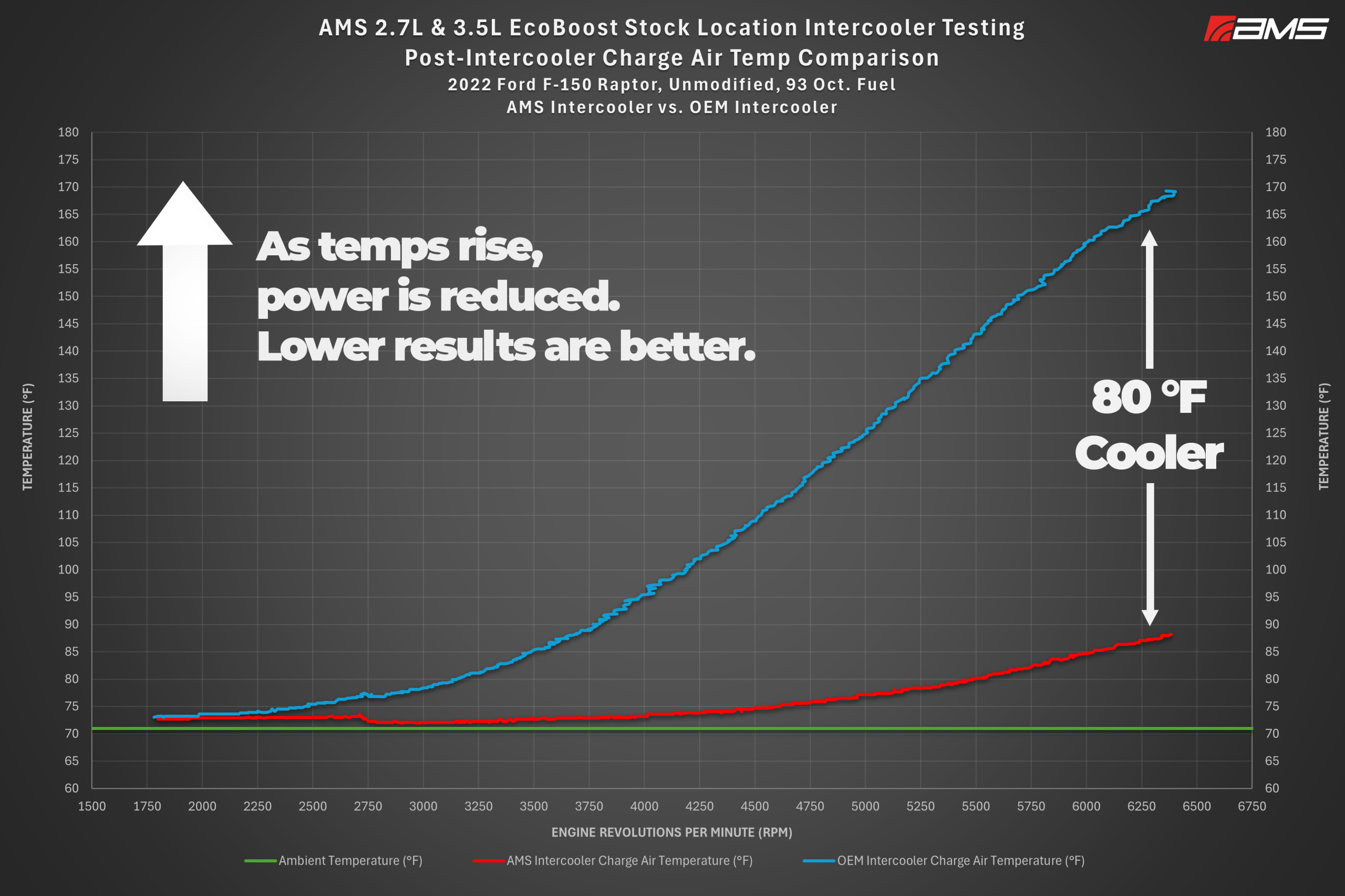
One of the most telling measures of intercooler performance is how well it maintains charge air temperature as the run progresses. A better intercooler holds temperatures down throughout the entire pull, delivering cooler, denser air to the engine from the first second to the last. Both intercoolers started at similar charge air temperatures at the beginning of the run. From there the OEM intercooler struggled immediately, with outlet temperatures climbing steeply and reaching 168 degrees Fahrenheit by 6,350 RPM. The AMS intercooler held remarkably flat throughout the same run, finishing at just 88 degrees Fahrenheit at 6,356 RPM. That is an 80 degree difference in the air temperature entering the intake manifold after a single 12-second pull.
A better intercooler does not just lower charge air temperatures, it makes the entire turbo system work more efficiently in the process. With the AMS intercooler installed, the turbochargers operated at lower pressure ratios and reduced shaft speeds while producing the same manifold pressure, resulting in lower compressor outlet temperatures and reduced thermal load across the entire system. Lower compressor workload also reduced turbine demand, producing lower turbine inlet pressure and a more favorable drive pressure ratio, allowing exhaust gases to exit the cylinders more efficiently and helping reduce exhaust gas temperatures during equivalent power runs.
For the driver, that gap translates directly into real-world performance. Cooler charge air is denser air, which means more oxygen mass entering the engine with every combustion cycle. Lower intake temperatures also prevent the ECU from pulling timing and boost to protect the engine. The result is more consistent, more reliable power whether you are making a single hard pull, towing under sustained load, or running a desert offroad trail where heat soak can compound with every throttle input.
A great intercooler has to win on two fronts simultaneously: it needs to extract as much heat from the charge air as possible while also keeping restriction through the core to a minimum. The AMS intercooler delivers on both. Using the same MoTeC dash data logger and 19-sensor array used throughout our F-150 and Raptor development program, our SnailWorks Engineering Team captured detailed intercooler inlet and outlet data across both temperature and pressure channels on every pull, giving us a complete picture of how each intercooler performs across the entire RPM range.
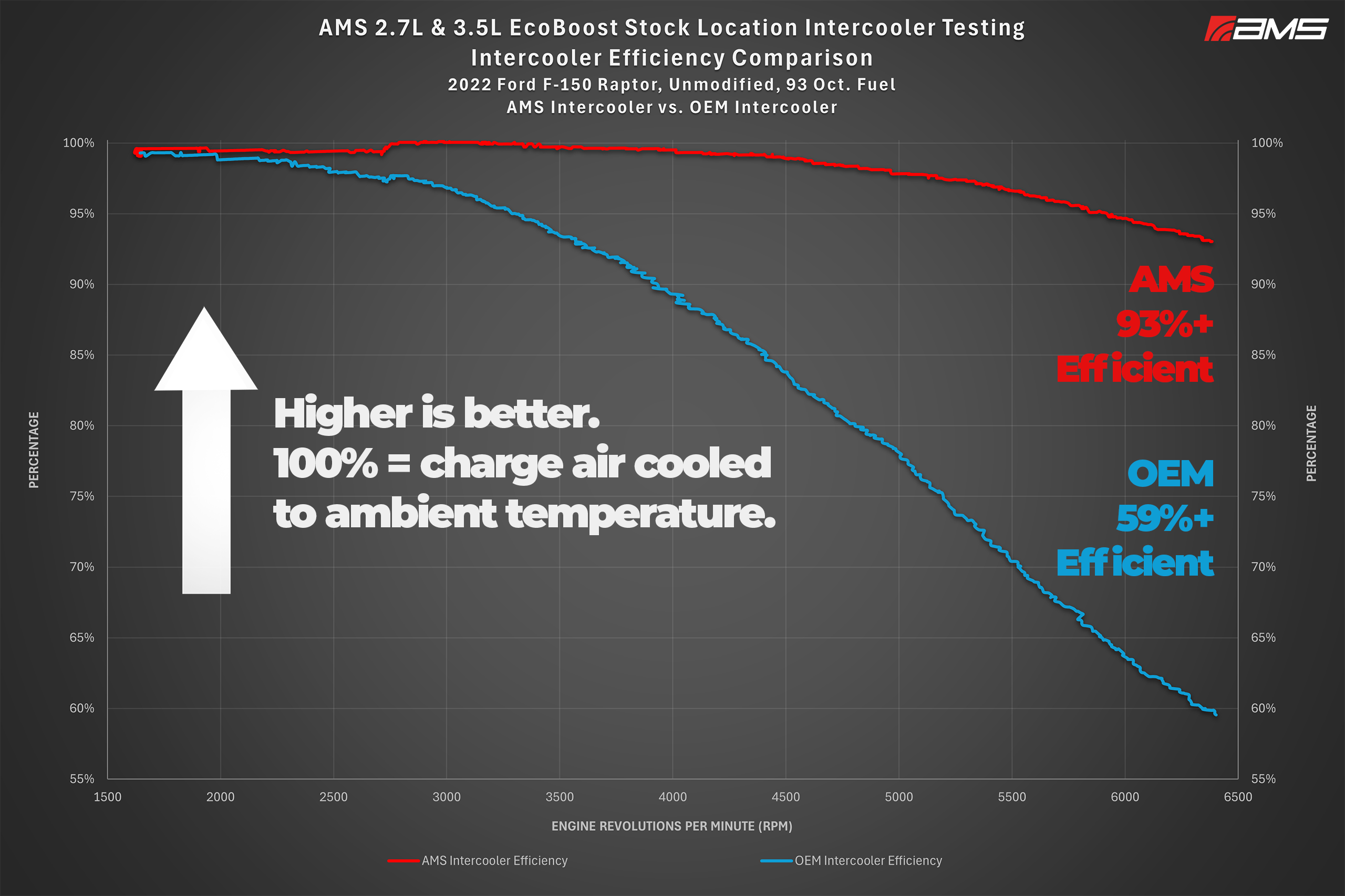
Intercooler efficiency measures the ability of the intercooler to reduce the temperature of hot air exiting the compressor before it enters the engine, with 100 percent representing air cooled all the way down to ambient temperature. The closer to 100 percent, the more effectively the intercooler is removing the heat added by the turbochargers, and the cooler and denser the air entering the engine. The AMS intercooler tested near 100 percent efficiency up to 5,000 RPM and held at 93 percent through redline. The OEM intercooler dropped as low as 59 percent under the same conditions, meaning a significant portion of the heat generated by the turbochargers was never removed before entering the engine.
On pressure drop, the AMS intercooler demonstrated 20.5 percent less restriction across the core compared to the OEM unit at peak RPM, an advantage that held consistently throughout the entire pull. On a poorly designed intercooler, a meaningful portion of the boost your turbos generate is lost to restriction before it ever reaches the intake manifold. The AMS intercooler preserves that pressure and delivers it to the engine where it can do useful work.
The fact that the AMS intercooler improves on both metrics simultaneously is not a coincidence. It is a direct result of the engineering behind the core design and flow-optimized end tank geometry, and it is why our test Raptor gained 12.3 wheel horsepower on an unmodified calibration while running nearly 2 PSI less boost. With a recalibration optimized for the AMS intercooler, there is considerably more on the table.